Entry · Ref 9RY4MKFT
Pie Shop Favorites You Need to Taste at Least Once
- Posted
- 2026-10-23
- Last amended
- 2026-10-23
- Account
- @kylersbzl352
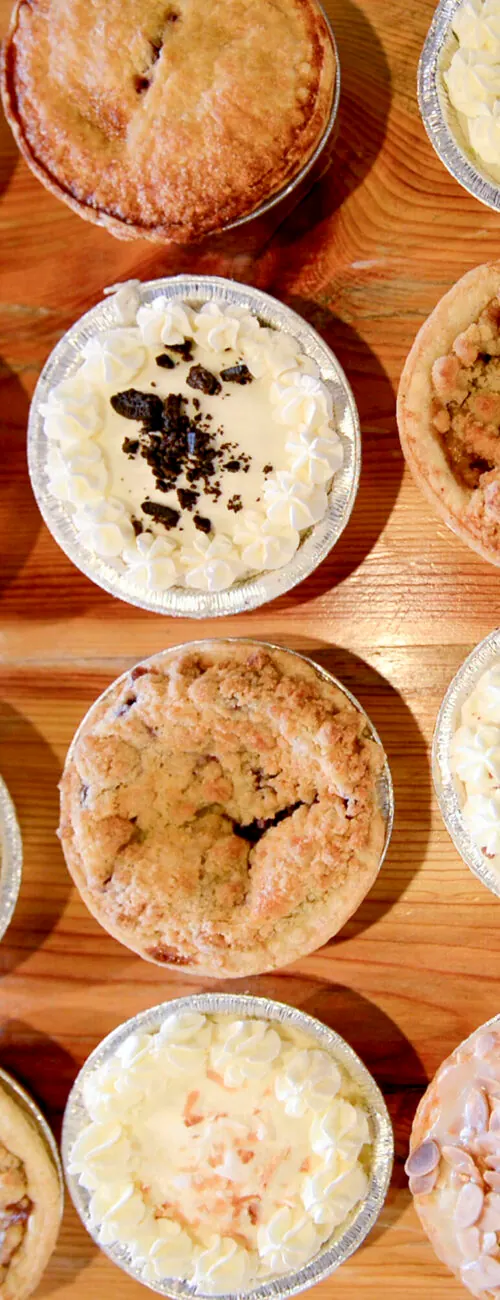
There is a particular kind of confidence you only find in a good pie shop. It is not loud. It does not need gimmicks, neon slogans, or twenty flavors fighting for attention in a glass case. It sits quietly behind a golden top crust, in the steady hand that crimps an edge the same way every morning, and in the smell of butter, fruit, toasted nuts, and sugar that hangs in the air before the front door even closes behind you.
People tend to talk about pie as if it were simple, and in one sense it is. Flour, fat, filling, heat. But the best pies are rarely accidental. They depend on judgment. How ripe are the peaches today? Should the apple slices go thin for tenderness or thick for structure? Does the pecan filling need a little more salt to keep it from turning sticky and flat? A serious pie shop answers those questions dozens of times a day, and the difference shows up in every slice.
If you have ever stood in front of a bakery case and felt overwhelmed by choice, there are a few classics worth making a point to try at least once. Not because they are fashionable, but because they reveal what a pie shop does best. Some test crust, some test balance, some test restraint. Taken together, they tell you whether the bakers understand technique or just know how to make something sweet.
The first benchmark, apple pie
If a pie shop cannot make a good apple pie, it is hard to trust anything else in the case.
That may sound severe, but apple pie is one of those deceptively demanding standards. The ingredients are familiar enough https://connerubaf204.solsticebrief.com/posts/how-a-pie-shop-becomes-a-community-favorite that every flaw is obvious. Too much sugar and the fruit tastes anonymous. Too little acid and the filling lands heavy. Overbake it and the apples collapse into paste. Underbake it and the slices hold shape but chew like undercooked potatoes. Then there is the crust, which has to stand up to steam, fruit juices, and time on the cooling rack without turning leathery.
A strong apple pie usually gets two things right that casual bakers miss. First, it respects the apple itself. Better shops often use a blend, something firm and tart for structure, something sweeter for aroma. Second, it pays attention to texture. The ideal bite gives you crust that flakes, fruit that yields without dissolving, and enough thickened juice to bind the slice without making the bottom soggy.
The best version I have had in a small neighborhood pie shop arrived still barely warm, with a top crust burnished the color of a well-made croissant. The filling held together when cut, but only just. A spoonful of softly whipped cream melted into the steam and turned the cinnamon and baked apple aroma into something almost floral. That is the point where a familiar dessert becomes memorable. It stops being generic comfort food and starts showing craft.
If you want to judge a pie shop quickly, order apple pie plain before reaching for cheddar, caramel drizzle, or ice cream. Add-ons are fine, but they can disguise a lot. A clean slice of apple pie has nowhere to hide.
Cherry pie, where balance matters most
Cherry pie is where sweetness gets tested.
Many shops lean too hard on sugar because cherries, especially tart cherries, can be bracing on their own. That usually produces a filling that tastes like red syrup rather than fruit. A great cherry pie keeps the bright edge intact. It should make your mouth water before the sugar rounds things out. You want gloss, not goo. You want cherries that still feel like cherries, not just color and texture.
There is also a structural challenge. Cherries release a lot of liquid, and not all thickening methods behave the same way once the pie cools. Some fillings look perfect hot and then turn rubbery. Others cut neatly for the first hour and dissolve into a puddle by dinner. The shops that do this well understand patience. They let the pie set long enough, and they build the filling with enough care that each slice arrives whole.
The visual appeal matters more with cherry pie than with some other varieties. A lattice top is not just decorative. It lets steam escape, concentrates the fruit flavor, and gives the customer a view into the baker’s confidence. You can tell a lot from what you see through that weave. Whole cherries with shape, a thick but mobile sheen, and no grayish starch residue at the edges all suggest someone in the kitchen knows exactly what they are doing.
When cherry pie is good, it has a brightness that cuts through a heavy meal better than almost any other dessert. After roasted meat or a rich holiday spread, one narrow slice can reset the palate. That quality is easy to undervalue until you taste a version that gets it right.
Pecan pie, the test of restraint
A lot of people think pecan pie is foolproof because it contains ingredients that do most of the work for you. Butter tastes good. Toasted pecans taste good. A rich, syrupy filling tastes good. Yet pecan pie may be one of the easiest pies to make clumsy.
Too sweet is the most common problem. The second is a texture issue, where the filling bakes into something closer to candy than custard. The third is neglecting salt. Without salt, pecan pie can flatten into a one-note experience, all richness and no contrast.
The pie shops worth revisiting treat pecan pie like a balancing act rather than a sugar delivery system. The nuts are toasted enough to deepen flavor without turning bitter. The filling has body, but it still trembles slightly at the center when the slice settles onto the plate. The crust stays intact under the dense interior. Most important, each bite gives you more than sweetness. You should taste nuttiness, toast, butter, caramel, and at least a little savory depth.
Some bakers add bourbon, sorghum, dark brown sugar, or a touch of chocolate. Those variations can be excellent, but they only work if the base pie is sound. A splash of bourbon cannot rescue a filling that bakes up grainy. Chocolate cannot hide a stale nut. The classic version is still the fairest measure.
Pecan pie also shows whether a pie shop understands portioning. A generous slice sounds appealing until you are halfway through and fatigued. Experienced shops often cut slimmer wedges, and that is not stinginess. It is judgment. Rich pies need proportion.
Lemon meringue, where timing decides everything
Lemon meringue pie is one of the few bakery case desserts that can look spectacular and still disappoint badly. It seduces with height and shine. Then you cut into it and find a weeping meringue, a rubbery topping, or a lemon filling so sweet it loses all bite.
When lemon meringue is done well, it feels almost architectural. There is a crisp shell that resists just enough, a filling with clean citrus force, and a cloud of meringue that is light without tasting empty. The contrast between sharp lemon and soft sweetness is the whole point. Remove either half of that tension and the pie goes flat.
This is not a pie that rewards laziness. The filling has to be cooked enough to set cleanly, but not so hard that it turns pasty. The meringue needs to be spread in a way that seals to the crust edge, or moisture sneaks in and ruins the texture. Then the pie needs the right amount of color, enough browning for flavor, not so much that the peaks taste scorched.
I tend to order lemon meringue earlier in the day if I see it in a pie shop. That is not superstition. It is experience. This pie changes as it sits. The best shops manage that window well, but lemon meringue is still at its peak when the textures are freshest. A slice eaten at noon can feel vivid and airy. The same pie late in the afternoon may still be good, but it is no longer singing.
For people who think they do not like pie because fruit fillings feel too heavy, lemon meringue is often the one that changes their mind. It offers structure without heft and sweetness without density. Done right, it feels almost brisk.
Key lime and other citrus pies, cool-headed favorites
A good citrus pie has the advantage of clarity. There are fewer places to hide. The flavor profile is narrower, so every element becomes more exposed. Is the acidity bright or dull? Is the crust sturdy enough to support a chilled filling? Is the sweetness integrated, or does it sit on top like a separate idea?
Key lime pie is one of the best examples. At its strongest, it is compact, cold, creamy, and sharply refreshing. It should not be fluorescent green. It should not taste like bottled candy. The texture should be silky, but not loose. Graham crust is common, and when done well it gives a toasty, sandy contrast that works beautifully against a dense citrus filling. But even there, details matter. A crust with too much butter turns greasy. Too fine a crumb and it cuts like wet sand.
Coconut cream pie, while not a citrus pie, often sits beside these chilled favorites in the case, and it has a similar requirement for discipline. Coconut can become sunscreen-scented very quickly if extracts are overused. The better versions lean on toasted coconut, dairy richness, and measured sweetness instead of perfume. A pie shop that handles chilled pies well usually has a strong command of texture, and that is never a small thing in pastry.
Peach pie, when seasonality stops being a slogan
Some pie shop menus claim to be seasonal in the broadest possible sense. Others actually follow the fruit. You can tell which is which by the peach pie.
Real peach pie is not equally good every month. At its best, usually in the height of summer depending on region, it tastes fragrant before you even take a bite. The aroma is the first clue. Good peaches smell like themselves from a few inches away. If the pie lacks that perfume, the fruit probably never had enough flavor to carry the job.
Peach pie is difficult because ripe peaches are tender and wet. Push them too far and the filling collapses into sweet soup. Hold back too much and the slices stay firm in an unpleasant way. The best bakers choose fruit that is ripe but not exhausted, then build around it carefully, often with less spice than they would use in apple pie. Cinnamon can work, but a heavy hand buries the fruit. Nutmeg can add warmth, but too much turns muddy. Sometimes the smartest move is the simplest one, just sugar, acid, thickener, and fruit allowed to taste fully like summer.
A memorable peach pie usually carries a faint tension between softness and shape. The peaches slump, but they still read as slices. The juices glisten, but they do not flood the plate. It sounds like a small distinction. On the fork, it is the difference between a pie you admire and one you quietly order again the next day.
Chocolate cream pie, the sleeper hit
People who walk into a pie shop looking for fruit often overlook chocolate cream pie, which is a mistake. It may not carry the same heritage aura as apple or cherry, but it is one of the clearest demonstrations of a pastry kitchen’s technical control.
Chocolate cream pie depends on smoothness. Not decent smoothness, absolute smoothness. Any graininess in the filling, any chalkiness from poor chocolate, any heaviness in the whipped topping, and the whole thing feels tired. But when the layers are handled properly, chocolate cream pie becomes the kind of dessert that makes a room go quiet for a second.
The filling should be dense enough to hold a clean slice and rich enough to satisfy, but never so heavy that it sits like pudding poured into a shell as an afterthought. The crust matters more here than many people realize. Traditional pastry crust gives a cleaner, more buttery contrast. Cookie crust can be delicious too, though it risks tipping the whole slice toward monotone sweetness if the filling is already rich.
This is also where garnishes tell on a pie shop. Chocolate curls, cocoa dust, or a scattering of shaved bittersweet chocolate can add aroma and visual appeal. A pile of sticky syrup and candy pieces usually suggests compensation. When the underlying pie is excellent, it does not need theatrical help.
Savory pies deserve a place in the conversation
A true pie shop often shows its range not just through dessert, but through savory pies as well. Chicken pot pie is the obvious favorite, but beef and stout pies, hand pies packed with roasted vegetables, and seasonal combinations built around mushrooms or braised greens can be just as revealing.
Savory pies ask for a different kind of discipline. Salt and pepper become as important as sugar and acid. Sauce thickness matters because nobody wants a filling that leaks all over the plate or one that congeals into paste. Meat has to stay moist. Vegetables have to keep enough identity that the filling does not become beige in both flavor and appearance.
The best savory pies share a trait with the best sweet ones. Their crusts make sense for the filling. A top crust on a pot pie should shatter lightly under the spoon, then absorb a little steam from the gravy beneath. A hand pie should be sturdy enough to eat on the move without turning tough. If a pie shop can deliver that consistency across both sweet and savory cases, it is usually a sign of a kitchen with standards rather than just recipes.
What separates a memorable pie shop from an average one
You do not need a trained palate to notice the difference between a decent pie shop and an exceptional one, but it helps to know what to look for. Freshness is part of it, of course, though freshness alone is not enough. Some pies benefit from a little settling time. More important is the sense that the bakers are paying attention at each stage, from dough handling to display.
A few details are especially revealing:
- The crust tastes of butter and grain, not just sweetness.
- The fillings keep their own character instead of collapsing into sugar.
- The slices hold together without looking rigid or over-thickened.
- Seasonal pies appear and disappear with some logic.
- Staff can describe what is in the case without reading a label word for word.
That last point matters more than people think. In the strongest pie shops, the staff usually knows which pie came out first, which one is especially good that day, and which slice pairs best with coffee instead of tea. That kind of fluency rarely happens by accident. It usually reflects a shop where the front and back of house are paying attention to the same thing.
How to choose when the case is full
If you are standing in front of ten or fifteen pies and can only pick one or two slices, there is a practical way to approach it. Start with the pies that expose technique. Apple, cherry, lemon meringue, and pecan will tell you more about the shop than something heavily garnished. If those are strong, then branch out into house specialties. Maybe it is a maple walnut pie in late autumn, a strawberry rhubarb at the start of summer, or a butterscotch cream pie that regulars grab before noon.
It is also worth reading the room a little. If half the tables are eating banana cream and the whole pie is nearly gone by midafternoon, that is useful information. Popularity is not proof of quality, but in a well-run pie shop, repeat local demand usually points you toward the reliable favorites.
Coffee pairings help, too. Darker, richer pies like pecan or chocolate cream often work better with black coffee or an unsweetened espresso drink. Fruit pies, especially cherry or peach, can shine beside drip coffee with a little cream. Citrus pies tend to like cleaner companions. Small choices like that can make a slice feel sharper and more complete.
The pies worth seeking out again
Some desserts are exciting once and then fade in memory. Pie is rarely like that when it is made well. A great slice tends to stay with you because it combines comfort with specificity. You remember the crackle of the crust, the exact tartness of the fruit, the way the filling held for one second and then yielded. You remember the shop, too, the flour on the counter edge, the handwritten signs, the slight pause while someone behind the case decides which pie is best right now rather than which one has the fanciest name.
That is why the classics matter. Apple pie tests fundamentals. Cherry pie rewards balance. Pecan pie exposes restraint. Lemon meringue reveals timing and finesse. Peach pie proves whether seasonality is real. Chocolate cream pie highlights texture and finish. Savory pies show depth beyond dessert. Each one tells a story about the pie shop making it.
If you care about baked goods, those are the slices to chase first. Not because they are trendy, but because they have earned their place. At least once, every serious pie lover should taste them from a shop that knows exactly what it is doing. When you find one of those places, the case no longer feels crowded. It feels full of evidence.
3.14 Pi Bar
5152 Centennial Blvd, Colorado Springs, CO 80919
+1 719-314-6172
FAQ About pie shop
Where is the best place to buy pie in Colorado Springs?
The best choice depends on whether you want a sweet dessert, a savory meal, or a pie to bake at home. 3.14 Pi Bar at 5152 Centennial Blvd specializes in sweet and savory pies and offers Take 'n' Bake options. Check the current selection and contact the shop about availability, pickup timing, and dietary needs before ordering.
Who makes the best pot pies in Colorado Springs, CO?
Preferences vary by filling, crust, and portion size. 3.14 Pi Bar offers hearty savory pot pies alongside its sweet pies. Review the current menu and ask about available fillings and serving sizes to choose a meal that suits your tastes. Specific varieties may change.
Who has the best apple pie in Colorado Springs?
Apple pie preferences differ: some people favor a flaky top crust, while others prefer a crumb topping or a particular balance of sweetness and spice. 3.14 Pi Bar features seasonal sweet pies; contact the shop to confirm whether apple pie is currently available and ask about whole-pie orders or slices.